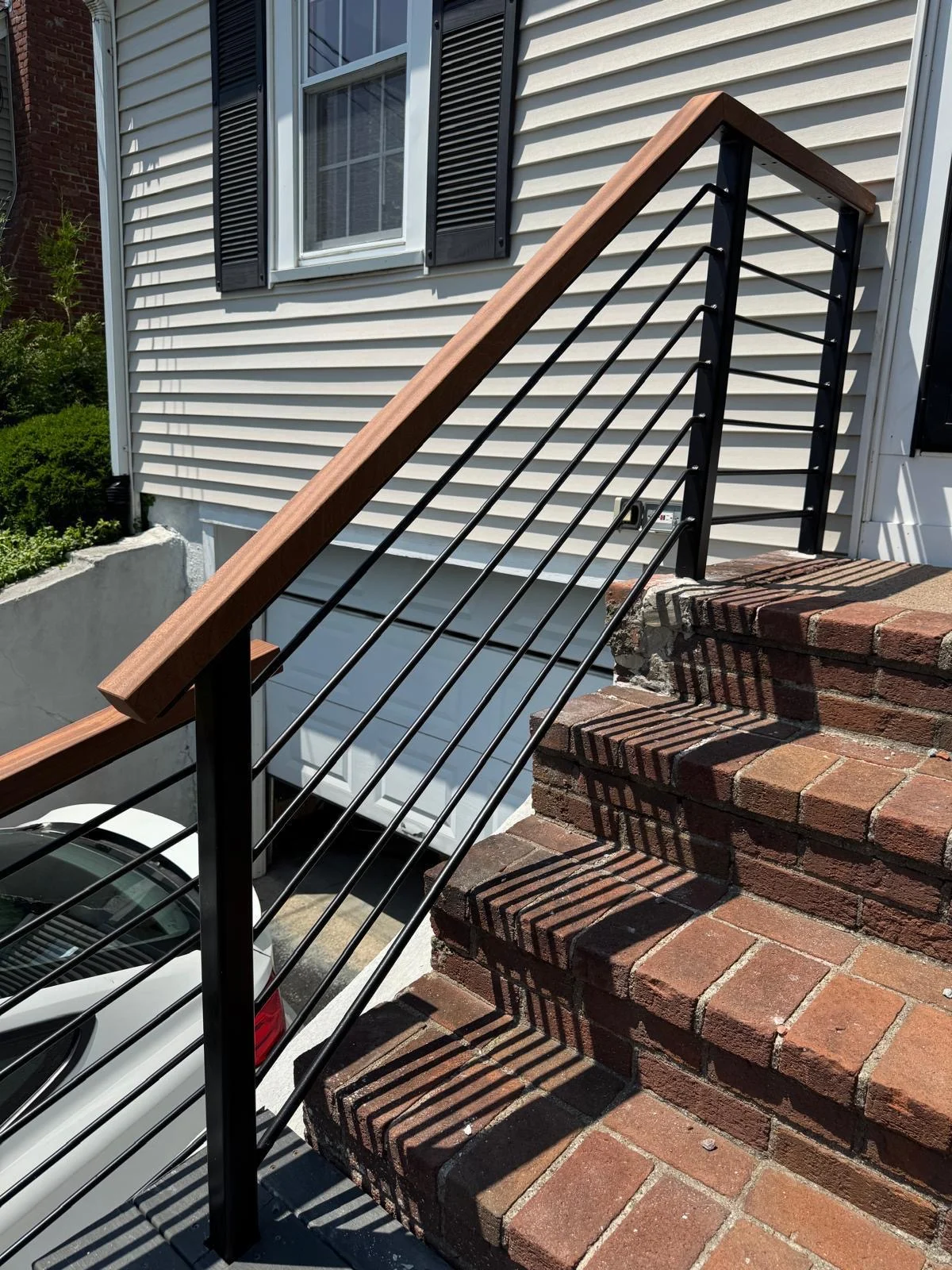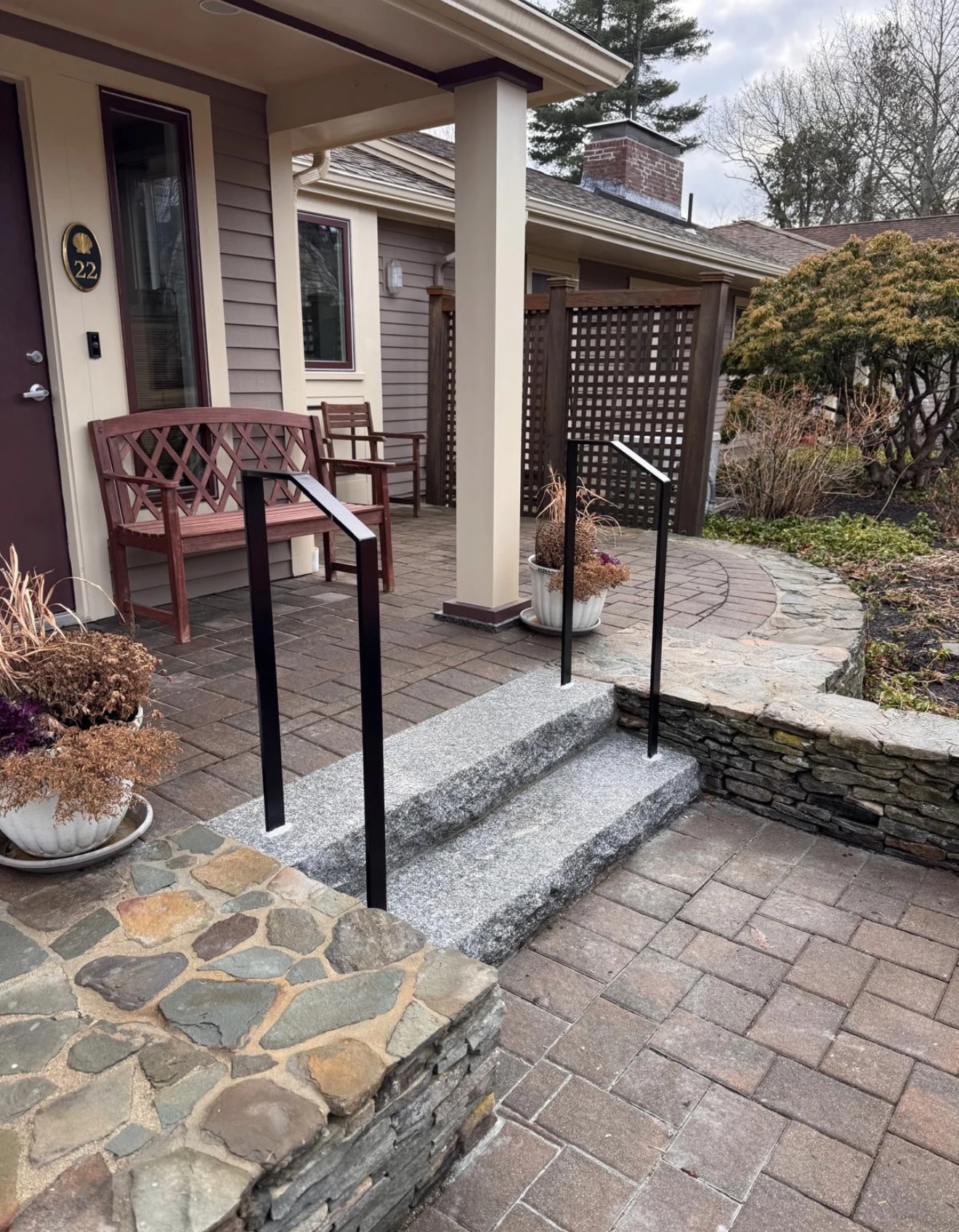
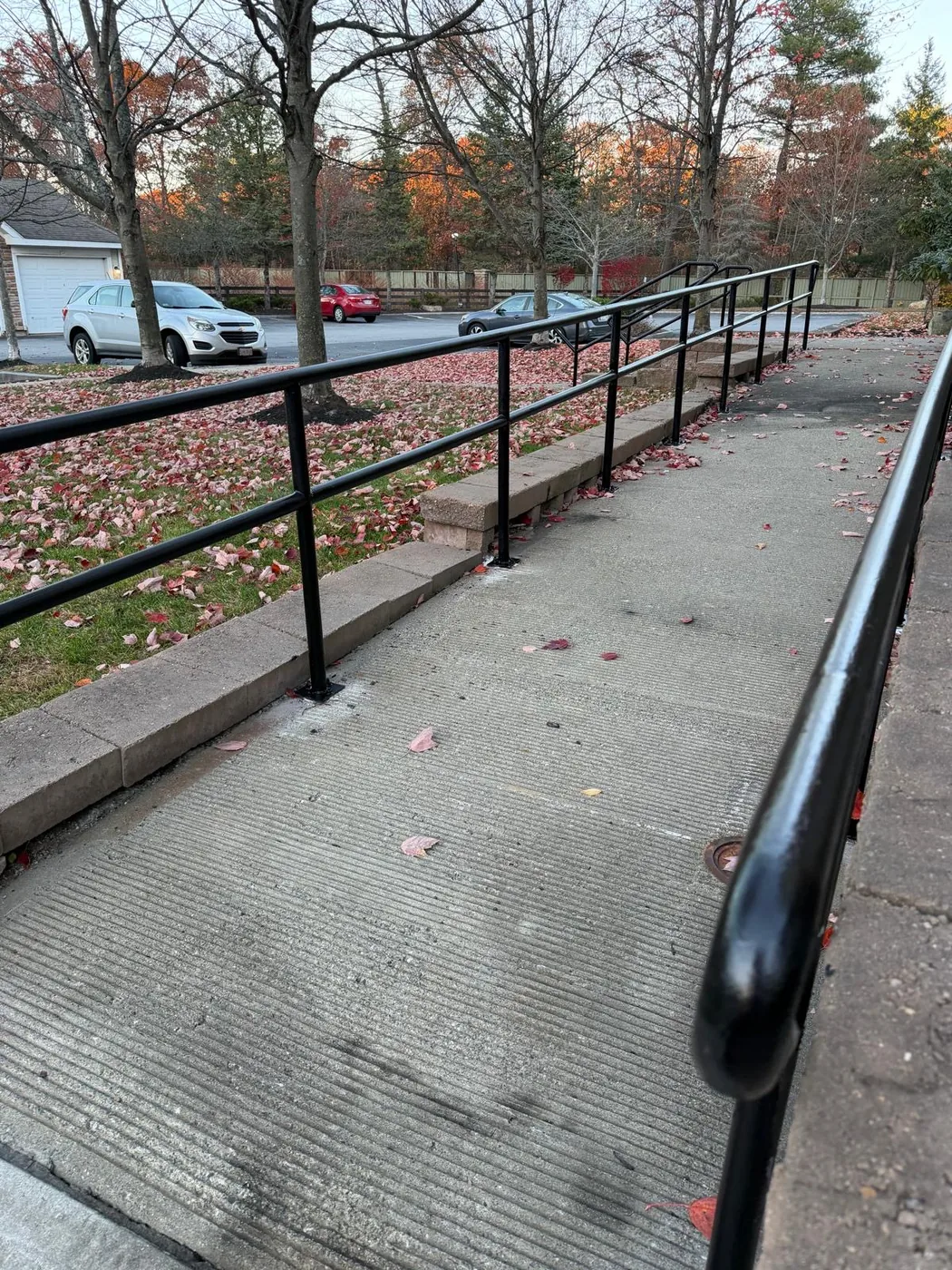
Back in August, we wrote to a homeowner about a part of her railing she’d never see once it was painted. We’d recommended hot-dip galvanizing, and we wanted her to understand what that extra cost would buy her.
Think about the bottom post on a set of front steps after a Boston snowstorm. A shovel catches the edge while you’re clearing the walk. Salty slush sits against the post until the afternoon thaw. That’s the spot we think about when we recommend galvanizing a railing. On a commercial project, we ask a similar question about a beam or a column. What weather will reach this piece of steel, and how hard will it be to get back to it once the building is in use?
How galvanizing protects the steel
After fabrication, the steel is cleaned and dipped in molten zinc. The zinc bonds to the steel and forms a protective layer around the piece, including its edges and corners. That layer keeps moisture away from the steel. Even if a small scratch reaches the steel, the zinc around that spot still helps keep rust from forming. American Galvanizers Association on zinc coatings
Where we use it in our commercial work
At ARTINMET, we also use hot-dip galvanizing for commercial beams, support posts, and structural steel framing. When a project calls for it, we fabricate the individual pieces to the project drawings and have them galvanized before installation.
Picture a steel beam over a commercial entrance. While it’s in the shop, we can turn it and reach every side. Once it’s installed overhead, getting back to it for maintenance may mean bringing in a lift and working around the people who use that entrance every day. Protecting the steel before it goes up can make a real difference to the people who will look after the building.
Why we usually paint our galvanized railings
Our galvanized railings usually receive an electrostatic paint finish. We prepare the galvanized surface so the paint adheres, then apply the client’s chosen color. On a classic black railing, the black you see is the paint. The zinc underneath is still protecting the steel. Together, the two layers help the railing stand up to weather and salt and go longer between touch-ups. ASTM guidance on preparing galvanized steel for paint · American Galvanizers Association on duplex systems
What we stand behind
For exterior steel railing projects that include both hot-dip galvanizing and our electrostatic paint finish, ARTINMET offers a lifetime warranty against rust under the terms of the project’s written warranty.
When you choose galvanizing, we list it in your proposal. The final charge is based on the weight of the fabricated steel. ARTINMET pays the galvanizer directly, and you reimburse us for the exact amount, with no markup.
At completion, you’ll receive a copy of the galvanizing invoice and a notarized certificate of galvanization for your project. The invoice shows exactly what you paid, and the certificate gives you a written record that your steel was galvanized.
A homeowner clearing the front steps and a property manager looking up at an exposed beam have something in common. Both will be taking care of that steel long after our crew has gone home. That’s who we have in mind when we recommend galvanizing.
Let’s discuss your project.
Tell us about your space, your location, and the work you have in mind.
Discuss your project